
Foremilk vs Hindmilk: Is this really a thing?
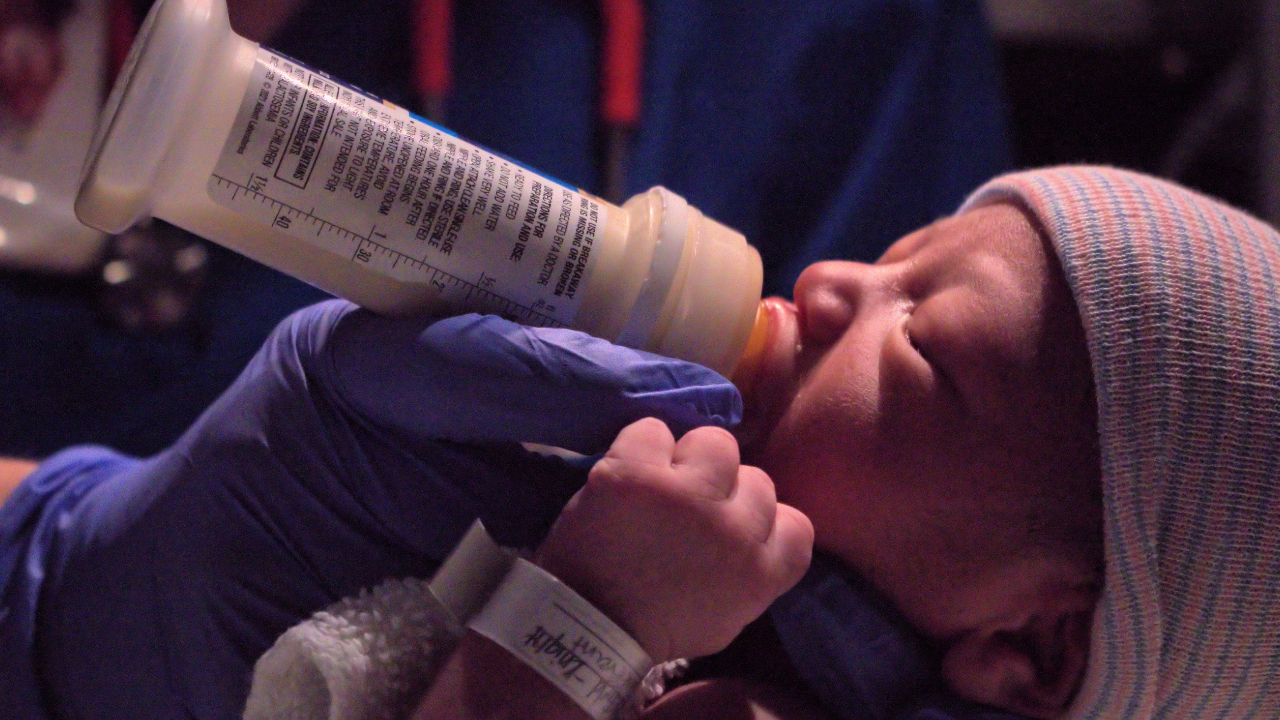
Have you ever heard someone talk about foremilk and hindmilk and wondered if your baby is only getting the "good" milk?
Good news: for most breastfeeding families, this isn't something you need to worry about at all.
So what's the actual difference?
“Foremilk” is the first milk your baby receives when they latch and you have a let down. It tends to be faster flowing, a little more watery, a little lower in fat and is great for energy and hydration. As the feed continues and the breast drains, the milk gradually slows in flow and becomes richer in fat. This is often called “hindmilk”.
But here's the part that gets lost: it isn't really two different types of milk. It's a gradual change in fat content across the feed, not a switch that flicks partway through.
How do I know if my baby gets the hindmilk?
Your baby benefits from the entire feed. As long as they're feeding effectively and are allowed to finish the breast before switching sides (when that applies to you), they'll naturally receive milk with increasing fat content as the feed progresses.
There's no need to time the feeds or try to keep your baby on one side for a set number of minutes. Some babies take longer to feed. Others are efficient and done in a few minutes. Both can be completely normal. It is more important to watch what your baby is doing through the feed rather than time a feed.
When does foremilk and hindmilk actually become relevant?
Occasionally, if a parent has a very large milk supply or a forceful let-down, a baby may take in a larger volume of the first milk then seem full. These babies can show symptoms like frequent green, frothy stools, excessive wind, or unsettled feeding and may be a sign that they are getting a lot of “foremilk”.
Even in this situation, the focus isn't on your baby getting more hindmilk. It's on managing the oversupply or forceful let-down itself, which is a different conversation entirely and one worth having with an IBCLC to help you effectively manage overall supply.
The takeaway
Trust your baby. Watch their cues, not the clock. Effective feeding, good weight gain, and plenty of wet and dirty nappies are far better indicators that breastfeeding is going well than worrying about foremilk versus hindmilk ever will be.
Every drop of milk is designed for your baby's needs, and your milk is constantly changing to provide exactly what they need, without you having to manage or time any of it.
If you're second-guessing feeds like this often, see an IBCLC for guidance
Foremilk and hindmilk is just one of the many myths that circulate once you start looking for reassurance online. The trouble is, the more conflicting advice you read, the harder it gets to trust what your baby is actually telling you.
Inside the Best Start Breastfeeding Membership, you'll learn how your body actually makes and delivers milk, what's genuinely normal at each stage, and how to read your baby's cues instead of the clock or the internet. You'll also have weekly group calls where you can bring exactly this kind of "is this normal" question and get a straight answer, plus a community of mums asking the same things you are.
You get 12 months of access for one payment of $299, or $70/month if you'd rather spread it out.
Join the Best Start Breastfeeding Membership
If you're unsure whether what you're seeing at feeds is normal for your baby, I'm here to help you find out. You can also book a 1:1 consult in clinic or via telehealth..
Warmly, Eve Coote Best Start Lactation Consultancy
Author